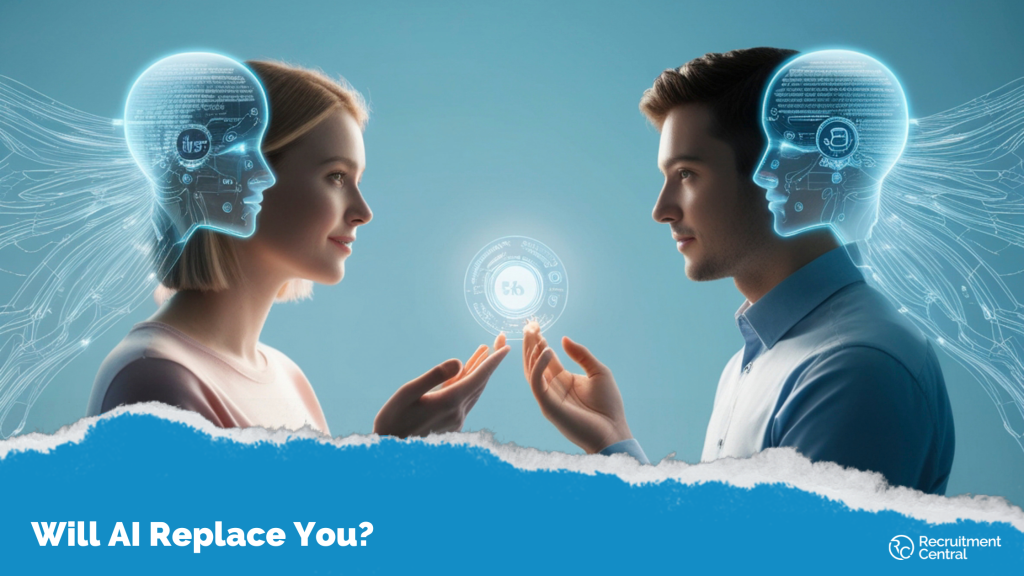
Will AI Replace You? That’s what professionals across Australia are asking as LLMs and AI agents take over routine tasks.
The answer? Be AI-complementary. Use AI as a tool, but keep decisions and judgement human.
In practice, that means knowing when to use it, when to question it, and when your own judgement matters more.
When it comes to whether AI will replace you, know that you are not alone in thinking this way. Plenty of people are wondering where they stand. Tasks that once relied on experience are now handled by software. Teams are changing shape. Even if your role isn’t disappearing, it may look very different in a year or two.
This does not mean you need to compete with AI or learn every new tool. What matters more is understanding the human skills that keep you valuable, and knowing how to use technology without handing over your judgement.
What you’ll learn
- What it means to be AI-complementary, and why employers value it
- The human skills that still set people apart
- How to show you can use AI in a practical, responsible way
- Simple ways to future-proof your career without overhauling everything
Understanding the AI-complementary mindset
Most employers are not trying to replace people with AI.
What they are looking for instead is a mix of technical awareness and human judgement.
The tools are fast and efficient, but they come with risks. Someone still needs to use them properly.
What employers are really looking for is trust. They want people who can use AI well, not just access it.
In practice, candidates tend to fall into three groups:
- People who avoid AI completely
- People who rely on it too heavily without questioning it
- People who use it, but apply their own judgement
That third group stands out.
Being AI-complementary is not about being technical. It is about knowing when to use a tool, when to question it, and when to step in. It means checking assumptions, spotting gaps and understanding that responsibility always sits with you.
The skills that still set people apart
As AI takes over routine tasks, the pressure shifts. Decisions matter more. Judgement matters more. That is where human capability becomes obvious.
- Critical thinking and judgement
AI can sound confident even when it is wrong. Someone still needs to sense-check the output.
That might mean questioning where the data came from, spotting assumptions that do not hold up, or recognising when something will not work in practice. - Emotional intelligence and empathy
Work is still built on relationships. Tools do not pick up tone, hesitation or frustration.
People do. They adjust how they communicate, support others and respond to what is happening in the moment. - Creative thinking
AI is good at reworking existing ideas. It struggles when the path forward is unclear.
Bringing new perspectives, connecting different experiences and thinking laterally strengthens the output. - Problem framing
Before any tool is useful, someone has to define the problem.
Where should time be spent? What matters most? What does success look like? These decisions sit with people, not systems. - Adaptability and resilience
Work changes quickly. Priorities shift. Tools do not always behave as expected.
People who stay flexible, learn as they go and keep moving forward are the ones who stay effective. - Ethical judgement
AI raises questions around bias, privacy and appropriate use.
These do not resolve themselves. People decide where the boundaries are and remain accountable for those decisions. - Communication and influence
Good decisions only matter if others understand them.
Explaining your thinking, translating technical detail and bringing others with you is still a core skill.
Showing you can work with AI
Many candidates struggle here, not because they lack access to tools, but because they talk about AI in vague terms.
Employers are listening for specifics. They want to know what you did, what changed and how you handled it.
- AI literacy basics
Listing tools is not enough. What matters is how you explain them.
Can you describe what a tool does in plain language? Do you understand where it struggles? Do you know when not to use it?
For example, recognising that a language model can sound convincing while being incorrect shows awareness. - Practical examples
Strong examples are simple and specific.
You might explain how you used AI to draft an outline, test an idea or identify risks. Then explain what you changed, what you ignored and why. - Checking outputs properly
Saying you check the output is not enough. The Australian Government’s AI guidance makes it clear that people need to actively verify outputs, not just trust them: - Using AI in your field
Generic examples do not build confidence. Specific ones do.
Talking about how AI fits into your actual work, including risks and limitations, shows real understanding. - Understanding responsibility and trust
Employers want to know who owns the outcome.
Strong candidates explain how decisions are documented, how data is handled and how accountability stays clear. If something goes wrong, they can explain their role in it.
Here’s the thing, even the Government’s AI rules make clear that you are the one who has to monitor performance and own the outcomes. When you can explain that in an interview, it shows employers they can trust you with the real decisions.
Preserving your value as work changes
AI is changing work. That part is real, but you do not need to panic.
What is often overstated is the need to adopt everything at once. That is not what most employers expect.
They are looking for people who stay steady. People who stay engaged when tools are introduced. People who do not hand over decisions just because something looks efficient.
Jobs and Skills Australia says this is more about experimenting with tools to make your work better and showing you have the adaptability to keep up as roles evolve.
The professionals who remain valuable tend to do a few things consistently:
- They question outputs when something feels off
- They explain their reasoning clearly
- They understand where AI helps and where it does not replace human involvement
You do not need to overhaul everything.
Start with what you already do. Strengthen one human skill that affects real decisions. Pair it with one area of AI literacy that helps you work more carefully, not just faster.
As hiring continues to focus on skills, the pattern is clear. People who stay close to their work, take responsibility and use technology thoughtfully are the ones employers trust.
Not sure where to start with all this? Our Career Planning Guide breaks it down into simple steps that actually work
Looking for extra support while navigating your job search?
Explore our Candidate Resources Hub for practical tools, templates, and career advice.
Refresh your materials with Updating Your Resume Made Easy, then stay motivated by subscribing for monthly insights, new roles, and job search tips here.
For more career and interview advice, visit this page.